


Product Overview
Designed to eliminate warp streaks, uneven tension, and high loom downtime, our heavy-duty warping systems provide stable, high-precision pre-weaving preparation for modern weaving mills. Engineered for continuous industrial operation, our machines integrate robust mechanical structures with responsive digital controls.
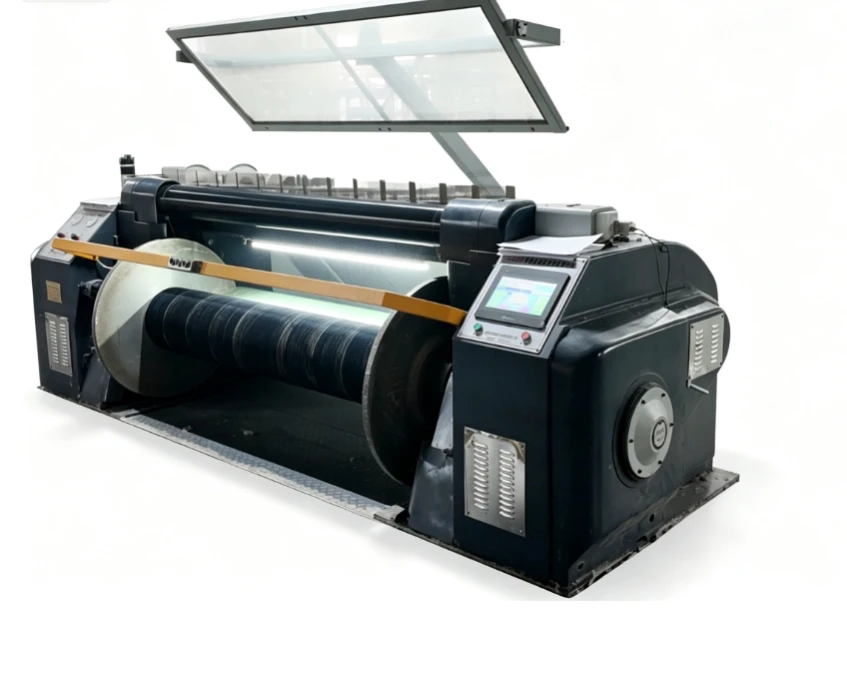
Warping machines serve as critical pre-weaving equipment that transfers yarns from creel packages onto a warp beam under controlled tension, accurate alignment, and uniform beam density. The prepared warp beam is then supplied to downstream processes such as sizing and weaving.
Our manufacturing range covers two core configurations. The appropriate system must be selected based on your yarn type, fabric construction, production volume, warp beam specifications, and downstream processing requirements:
Direct Warping Machine: Engineered for high-volume, single-color productions, feeding a large number of yarn ends directly from the creel onto the warp beam in a single continuous operation.
Sectional Warping Machine: Engineered for complex patterns, yarn-dyed fabrics, and multi-color applications, winding yarns in successive sections onto a drum before transferring the complete yarn sheet onto the final warp beam.
Standard Process Workflow:
Yarn Creel -> Tension Regulation and Break Detection -> Precision Alignment (Reed) -> Controlled Winding -> Warp Beam Preparation
-
![Batch-type Sectional Warping Unit]() Batch-type Sectional Warping UnitOur Batch-type sectional warping unit is the ultimate precision machine for high-quality warp arrangement and length control. In our Jiangsu-based facility, we have engineered this Batch-type...view more
-
![Straight Warping Device]() Straight Warping DeviceThe Straight warping device, particularly the JT800-NS series, is our answer to sizing-free weaving demands. In our 17 years of operation, we have mastered the "Straight" warping process for...view more
-
![Fabrication Warping Machinery]() Fabrication Warping MachineryOur Fabrication warping machinery is the result of 17 years of focused innovation in the textile machinery sector. We understand that "Fabrication" requires a machine that can handle various yarn...view more
-
![Combined Warping And Sizing Line]() Combined Warping And Sizing LineThe Combined warping and sizing line is our heavy-duty solution for home textile and blackout fabric producers who demand high-speed processing without sacrificing durability. As a source...view more
-
![Integrated Sizing-warping System]() Integrated Sizing-warping SystemThe Integrated sizing-warping system is Jingtian's revolutionary solution to the "two-step" problem in textile preparation. By combining sizing and warping into one high-efficiency workflow, this...view more
-
![Synthetic Filament Warping Unit]() Synthetic Filament Warping UnitOur Synthetic filament warping unit, particularly the JT600-PLUS series, is designed for the modern textile mill that demands both flexibility and power. Having established long-term relationships...view more
-
![Continuous Filament Warper Plant]() Continuous Filament Warper PlantThe Continuous filament warper plant is our specialized solution for high-tenacity and functional filaments. In the textile machinery world, "Jingtian" stands for innovation, and our Continuous...view more
-
![Cloth Weaving Warping Machinery]() Cloth Weaving Warping MachineryThe Cloth weaving warping machinery is the workhorse of our integrated electromechanical series, designed for the diverse needs of large-scale textile production. In our Jianhu facility, we...view more
-
![Fiberglass Warping Device]() Fiberglass Warping DeviceHigh-performance glass fiber warping requires a specialized Fiberglass warping device that can handle abrasive inorganic fibers without wear or damage. Our GA339 series Fiberglass warping device...view more
-
![Thread Warping Mechanism]() Thread Warping MechanismThe Thread warping mechanism from Jingtian Machinery is a testament to our decade-long expertise in precision engineering. Specifically designed for fine denier yarns and high-quality threads,...view more
-
![Technical Fabric Warping Equipment]() Technical Fabric Warping EquipmentOur Technical fabric warping equipment is a masterclass in electromechanical intelligence, designed for the rigorous standards of modern industrial weaving. We have perfected the art of handling...view more
-
![Industrial Textile Warping System]() Industrial Textile Warping SystemProcessing high-modulus fibers like basalt, quartz, and glass fiber requires an Industrial textile warping system that doesn't compromise on precision. Based on our GA339 series technological...view more


Yarn Feeding
Yarn packages are mounted on the creel and fed steadily into the machine. Calibrated tensioning units regulate yarn feed while maintaining the parallel arrangement of individual strands. Required tension settings are determined by yarn material, count, package density, and operating speed.
Yarn Tension Control and Break Detection
During feeding, tension controllers maintain consistent resistance. Integrated yarn-break detection sensors continuously monitor the yarn sheet and trigger an immediate, controlled machine-stopping sequence upon detecting any strand failure. Response times and braking behavior are engineered according to the selected model specification.
Yarn Alignment
An adjustable comb or expanding reed guides the yarn sheet, aligning individual ends to the precise working width required by the warp specification.
Winding
For Direct Warping: Yarns are wound directly onto the warp beam with hydraulic or pneumatic press-roller assistance to ensure uniform internal density.
For Sectional Warping: Yarns are wound in precise, sequential sections onto a conical drum, ensuring identical circumference across all sections before final transfer onto the warp beam.
Warp Beam Preparation
Following the winding process and quality checks, the finished warp beam is ready for transport to downstream sizing or direct weaving operations.
Key Features and Configuration Options
Precision Yarn Tension Adjustment
Our tensioning systems maintain stable yarn feeding to prevent slack ends and density variations. Depending on the model configuration, options include mechanical tensioners, adjustable damping discs, or automated tension-monitoring modules. Specific tolerances are verified against factory test data for your selected yarn type.
Synchronized Break Detection and Emergency Braking
To prevent broken ends from becoming buried inside the beam, our optical stop-motion sensors detect breaks instantly and interface with high-torque pneumatic brakes. Sensor response time and stopping distances are documented under specific operational test parameters.
Robust Winding Control and Drum Geometry
Winding control systems are tailored to the distinct mechanical requirements of direct versus sectional processes. Drum geometry, traverse control, and winding pressure are engineered to eliminate length discrepancies between the edges and center of the warp sheet.
Industrial Drive and Control Architecture
Machines are equipped with high-performance PLC platforms, servo drives, frequency inverters, and industrial touchscreens, providing operators with clear parameter control and recipe management.
Applications and Selection Matrix
|
Application Sector |
Compatible Yarn Types |
Selection Considerations |
Recommended System Configuration |
|
Denim and Workwear |
Ring-spun cotton, OE cotton, Polyester blends |
Production volume, batch size, beam specifications |
Direct Warping Machine with V-Creel |
|
Home Textiles and Bedding |
Combed cotton, Viscose, Microfiber |
Yarn count, end-count, working width, sizing compatibility |
Direct Warping Machine with Parallel Creel |
|
Apparel and Yarn-Dyed Fabrics |
Filament yarns, Cotton, Silk, Wool blends |
Color patterns, batch flexibility, changeover frequency |
High-Precision Sectional Warping Machine |
|
Technical Textiles |
Glass fiber, Aramid, High-Tenacity Polyester |
Tension limits, abrasion resistance, static control |
Specially Configured Direct or Sectional System |
Technical Specifications
|
Parameter |
Direct Warping Machine (HD-Series) |
Sectional Warping Machine (SW-Series) |
|
Warping Speed |
Up to 1,200 m/min (Subject to model and yarn limits) |
Up to 800 m/min (Winding) / 200 m/min (Beaming) |
|
Working Width |
1,400 mm - 2,800 mm (Customizable) |
1,800 mm - 3,600 mm (Customizable) |
|
Flange Diameter Range |
Dia 800 mm / Dia 1000 mm / Dia 1250 mm |
Dia 800 mm / Dia 1000 mm |
|
Maximum Beam Weight |
Up to 2,500 kg (Includes structural load rating) |
Up to 2,000 kg (Includes structural load rating) |
|
Braking Performance |
High-torque pneumatic disc braking system |
High-torque pneumatic disc braking system |
|
Creel Capacity |
600 to 1,200 ends (Model dependent) |
400 to 800 ends (Model dependent) |
|
Control System |
Industrial PLC + Touchscreen HMI |
Industrial PLC + Servo Traverse Control |
|
Main Drive Power |
15 kW - 37 kW (AC Inverter Duty) |
11 kW - 22 kW (AC Inverter / Servo Duty) |
|
Compressed Air Supply |
0.6 - 0.8 MPa (Clean, Dry, Filtered Air) |
0.6 - 0.8 MPa (Clean, Dry, Filtered Air) |
|
Electrical Compliance |
CE Certified design; UL-compliant components available |
CE Certified design; UL-compliant components available |
Creel Layouts
V-Type High-Speed Creels: Designed for exterior yarn loading, minimizing downtime between batch runs.
Rectangular Creels with Swiveling Frames: Allows inner-side pre-threading while the machine operates on the outer side, substantially reducing changeover intervals.
Special Yarn Preparation Attachments
Anti-Static Ionizing Bars: Neutralizes static charges on synthetic filament yarns to prevent ballooning and tangling.
Waxing and Oiling Units: Applies uniform surface lubrication for technical yarns requiring reduced friction before downstream weaving.
Enhanced Optical Sensors: High-density drop-wire or infrared matrices for specialized multi-end monitoring.
Manufacturing Capability and Quality Control
In-House Machining and Assembly
Our manufacturing infrastructure incorporates heavy-duty frame fabrication, precision milling on multi-axis CNC centers, mechanical sub-assembly, and full electrical integration. Dimensional compliance is strictly maintained through controlled in-house inspection procedures.
Standard Quality Inspection Workflow
Incoming Material Verification: Raw steel plates, tubes, and purchased components undergo dimensional and metallurgical checks.
Machining Quality Control: Critical parts are measured against approved engineering drawings using calibrated instruments.
Mechanical Assembly Inspection: Rigorous verification of alignment, spindle runout, and mechanical clearances.
Electrical and Pneumatic Testing: Wiring continuity, pressure testing, and I/O logic verification.
Pre-Shipment Functional Trial: Simulated running tests and dry-runs to ensure mechanical and control stability prior to crating.
Global Industrial Components
To ensure long-term maintenance viability and local part sourcing for international mills, our machines are built using globally recognized industrial hardware brands (such as standard PLC platforms, pneumatic actuators, and heavy-duty bearings). Complete electrical schematics and spare-parts lists are provided with every machine.
Frequently Asked Questions
As one of the most professional warping machine manufacturers and suppliers in China, we are able to meet the needs of the majority of our customers. Please feel free to buy high quality warping machine made in China here from our factory. Contact us for more details.


