Can I repair a weaving preparation machine by myself?
As a supplier of weaving preparation machines, I often get asked by customers if they can repair these machines on their own. It's a valid question, especially for small - scale manufacturers or those on a tight budget. In this blog, I'll explore the feasibility of self - repair, the risks involved, and when it might be better to seek professional help.
Understanding the Complexity of Weaving Preparation Machines
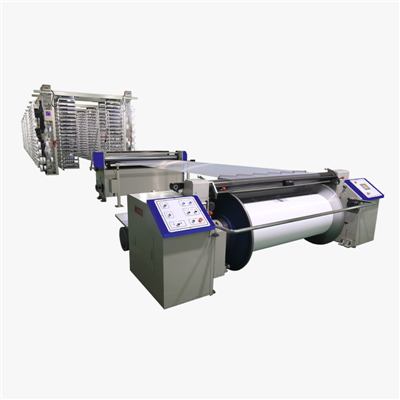
Weaving preparation machines are highly specialized pieces of equipment. They are designed to perform a series of complex tasks such as warping, sizing, and beaming, which are crucial for the efficient production of high - quality woven fabrics.
For example, the sizing process is an essential step in weaving preparation. It involves applying a protective coating to the yarns to increase their strength and reduce abrasion during the weaving process. Machines like the Sizing Machine for Glass Fiber and Glass Fiber Sizing Machine are specifically designed for this purpose. These machines have intricate components, including rollers, pumps, and control systems, which work in harmony to ensure the proper application of the sizing agent.
Similarly, Sizing Machine for Polyester is tailored to handle polyester yarns, and it has its own set of unique requirements and specifications. The complexity of these machines means that repairing them is not a straightforward task.
Skills and Knowledge Required for Self - Repair
To repair a weaving preparation machine on your own, you need to have a certain level of technical knowledge and skills. First and foremost, you should have a good understanding of the machine's mechanical components. This includes knowing how the gears, belts, and pulleys work, and being able to identify and replace worn - out parts.
Electrical knowledge is also crucial, as many modern weaving preparation machines are equipped with advanced control systems. You need to be able to read electrical schematics, troubleshoot electrical problems, and perform basic wiring repairs.
In addition to technical skills, you should have access to the necessary tools and replacement parts. Some parts may be difficult to source, especially if the machine is an older model or a specialized one. Without the right parts, any repair attempt is likely to be unsuccessful.
The Risks of Self - Repair
One of the main risks of self - repair is causing further damage to the machine. If you don't have the proper knowledge and skills, you may make mistakes that can lead to more serious problems. For example, incorrect installation of a part can cause the machine to malfunction or even break down completely.
Another risk is voiding the machine's warranty. Most manufacturers offer a warranty on their machines, but this warranty may be invalidated if you attempt to repair the machine yourself. This means that if something goes wrong after your self - repair attempt, you may not be able to get free repairs or replacements from the manufacturer.
When to Seek Professional Help
There are several situations where it is advisable to seek professional help for machine repair. If the problem is complex and you are not sure how to fix it, it's best to call in an expert. For example, if the machine's control system is malfunctioning or if there are issues with the hydraulic or pneumatic systems, a professional technician will have the expertise to diagnose and repair the problem.
If the machine is still under warranty, it's usually a good idea to contact the manufacturer or an authorized service provider. They can ensure that the repair is done correctly and that the warranty remains valid.
The Benefits of Professional Repair
Professional repair services have several advantages. Firstly, they have access to the latest diagnostic tools and equipment, which allows them to accurately identify the problem. They also have a team of experienced technicians who are trained to work on specific types of machines.
Secondly, professional repair services often offer a warranty on their work. This means that if the problem recurs within a certain period, they will come back and fix it at no additional cost.
Finally, by using a professional repair service, you can minimize the downtime of your machine. This is crucial for businesses, as any interruption in production can result in lost revenue.


Conclusion
While it is possible to repair a weaving preparation machine by yourself, it is not always the best option. The complexity of these machines, the risks involved, and the availability of professional repair services should all be considered.
If you have the necessary skills, knowledge, and tools, and the problem is relatively minor, you may be able to attempt a self - repair. However, for more complex problems or if the machine is under warranty, it is recommended to seek professional help.
As a supplier of weaving preparation machines, we understand the importance of keeping your machines in good working condition. If you have any questions about machine repair or if you are interested in purchasing a new machine, please feel free to contact us for a consultation. We are here to help you make the best decisions for your business.
References
- General knowledge about weaving preparation machines from industry experience.
- Technical manuals provided by machine manufacturers.