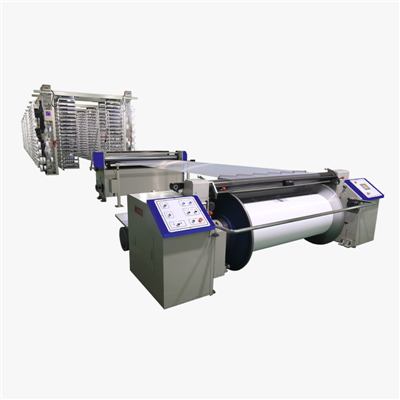
When it comes to the textile industry, a large - scale warping machine is an indispensable piece of equipment. As a warping machine supplier, I have in - depth knowledge of these machines and their production capacities. In this blog, I will explore what exactly the production capacity of a large - scale warping machine entails and the factors influencing it.
Understanding the Basics of Warping Machines
Before delving into production capacity, it's essential to understand what warping machines do. A warping machine arranges the yarns in parallel to form a warp beam, which is then used for the subsequent weaving process. There are different types of warping machines, such as the High - speed Warping Machine, Beam Warping Machine, and High Speed Section Warper, each with its own characteristics and applications.
Defining Production Capacity
The production capacity of a large - scale warping machine refers to the amount of yarn that can be warped within a specific time frame. It is typically measured in terms of the length of the yarn warped, the number of yarns warped simultaneously, or the number of warp beams produced in a day, week, or month.
Factors Affecting Production Capacity
- Machine Speed: The speed of a warping machine is a primary determinant of its production capacity. High - speed warping machines can run at significantly higher rates compared to traditional ones. For example, modern high - speed warping machines can achieve speeds of up to 1000 meters per minute or even higher. This means that they can warp a large quantity of yarn in a short period, directly increasing the production capacity.
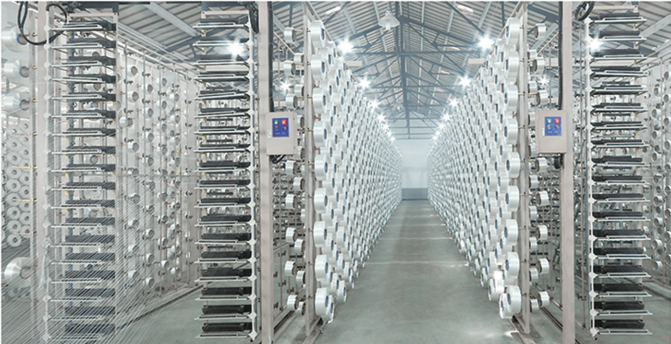
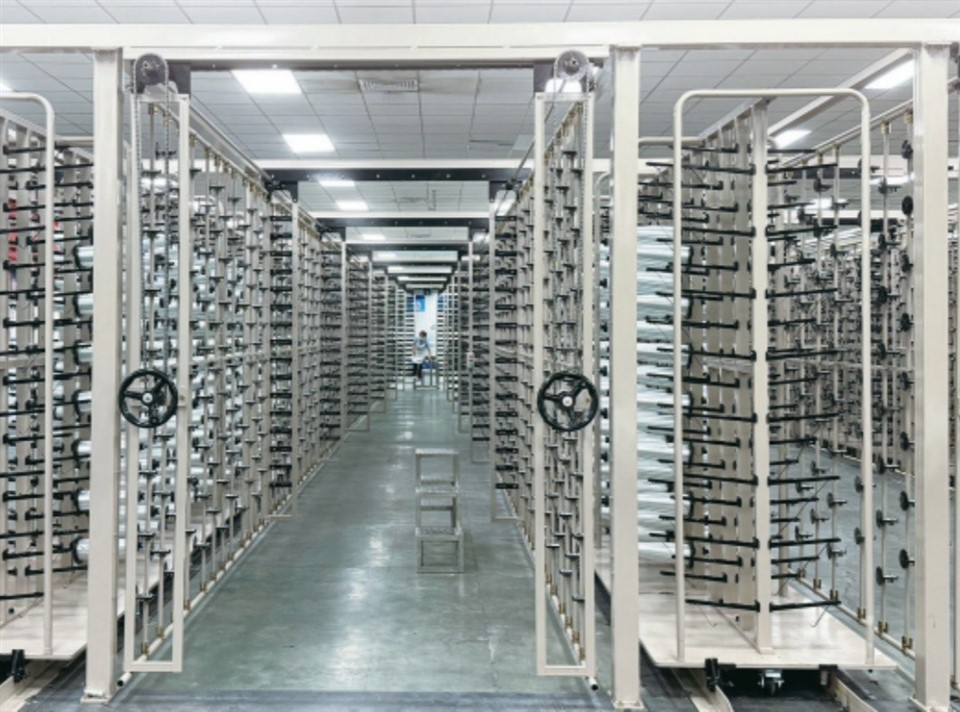
- Yarn Configuration: The number of yarns that a warping machine can handle simultaneously also affects its production capacity. A large - scale warping machine might be able to accommodate hundreds or even thousands of yarns at once. If a machine can handle more yarns, it can produce a larger warp beam in a single operation, thus increasing the overall production.
- Beam Size: The size of the warp beam that the machine can produce is another important factor. Larger beams can hold more yarn, but they also take longer to wind. However, if the machine is designed to handle large - diameter beams efficiently, it can still contribute to a high production capacity over time. For instance, a machine capable of producing beams with a large width and diameter can be used in industries that require large - scale production, such as commercial fabric manufacturing.
- Machine Reliability and Uptime: A reliable warping machine that has minimal downtime due to breakdowns or maintenance will have a higher production capacity. Downtime can significantly reduce the amount of yarn that can be warped in a given period. Therefore, machines with high - quality components and advanced control systems are often preferred as they can operate continuously for longer periods with fewer interruptions.
Production Capacity Examples
To illustrate the production capacity of large - scale warping machines, let's consider some examples:
- High - speed Warping Machine: A state - of - the - art high - speed warping machine running at a speed of 800 meters per minute, with the ability to handle 1000 yarns simultaneously. If the machine operates for 8 hours a day, it can warp approximately 384,000 meters of yarn in a single day (800 meters/minute * 60 minutes/hour * 8 hours). This is a substantial amount of yarn that can be used to produce a large number of fabric rolls.
- Beam Warping Machine: A beam warping machine designed to produce large - diameter beams. Suppose it can produce a beam with a yarn length of 200,000 meters in an 8 - hour shift. If the machine can operate 5 days a week, it can produce 1 million meters of warped yarn per week. This high - volume production is ideal for large - scale weaving mills.
- High Speed Section Warper: A high - speed section warper that can create multiple sections quickly. Let's say it can complete 10 sections per hour, with each section containing 10,000 meters of yarn. In an 8 - hour day, it can warp 800,000 meters of yarn, making it suitable for industries that require fine - tuned warping for different fabric patterns.
Comparing Production Capacities across Different Warping Machines
Each type of warping machine has its own unique production capacity based on its design and intended use.
The high - speed warping machine excels in high - volume, continuous warping. Its ability to run at high speeds makes it suitable for industries that require large amounts of yarn to be warped quickly, such as the production of basic cotton fabrics or large - scale synthetic fiber products.
The beam warping machine is focused on producing large, single - beam warps. It is often used in industries where a large quantity of uniform yarn is needed for processes like denim production or heavy - duty fabric manufacturing.
The high - speed section warper, on the other hand, is designed for more complex warping requirements. It can create sections of yarn with different tensions and arrangements, making it ideal for the production of fabrics with intricate patterns, such as jacquard fabrics or brocades.
Optimizing Production Capacity
As a warping machine supplier, I often provide advice on how to optimize the production capacity of these machines:
- Proper Machine Setup: Ensuring that the warping machine is correctly set up according to the type of yarn and the desired warp beam configuration is crucial. This includes adjusting the tension of the yarns, setting the correct speed, and calibrating the beam winding mechanism.
- Regular Maintenance: Regular maintenance is essential to keep the machine running smoothly. This includes cleaning, lubricating, and inspecting the components regularly. A well - maintained machine will have fewer breakdowns and higher production capacity.
- Operator Training: Well - trained operators can significantly improve the production capacity of a warping machine. They can identify and resolve issues quickly, operate the machine efficiently, and make adjustments as needed to ensure optimal performance.
Conclusion
In conclusion, the production capacity of a large - scale warping machine is a complex concept that is influenced by various factors such as machine speed, yarn configuration, beam size, and machine reliability. Different types of warping machines, such as the High - speed Warping Machine, Beam Warping Machine, and High Speed Section Warper, have different production capacities that are tailored to specific industrial needs.
If you are in the textile industry and looking to enhance your production through high - quality warping machines, we can offer a wide range of options to meet your requirements. Whether you need high - volume continuous warping, large - beam production, or complex section warping, we have the right machine for you. Contact us for more information, and let's start a discussion on how we can help you improve your production capacity through our advanced warping machines.
References
- Textile Machinery Handbook, Edition 2023
- Journal of Textile Technology, Vol. 15, Issue 2
- Industry Reports on Warping Machine Technologies, 2024