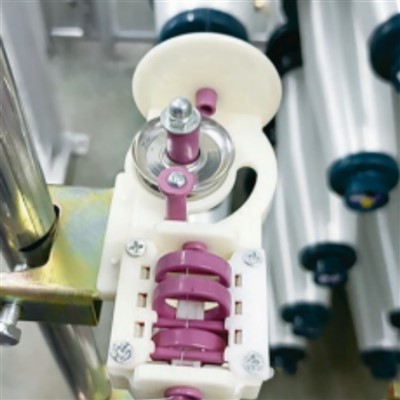
As a supplier of Glass Fiber Sizing Machines, I've witnessed firsthand the importance of understanding the vibration characteristics of these machines. In this blog, I'll delve into the key aspects of the vibration characteristics of Glass Fiber Sizing Machines, providing insights for those in the industry and potential buyers.
1. Importance of Vibration Analysis in Glass Fiber Sizing Machines
Vibration analysis is a crucial tool in the operation and maintenance of Glass Fiber Sizing Machines. The vibration characteristics can reveal a lot about the machine's health, performance, and efficiency. Excessive or abnormal vibrations can lead to various problems, such as reduced product quality, increased wear and tear on machine components, and even safety hazards. By understanding the vibration characteristics, we can identify potential issues early, take preventive measures, and ensure the smooth operation of the machine.
2. Sources of Vibration in Glass Fiber Sizing Machines
There are several sources of vibration in Glass Fiber Sizing Machines. One of the primary sources is the rotation of the machine's motors and shafts. As the motors and shafts rotate, they can generate vibrations due to unbalance, misalignment, or mechanical wear. Another source of vibration is the movement of the glass fiber through the sizing process. The tension and friction between the glass fiber and the sizing components can cause vibrations, especially if the sizing process is not properly adjusted.
3. Types of Vibration in Glass Fiber Sizing Machines
There are two main types of vibration in Glass Fiber Sizing Machines: forced vibration and self - excited vibration.
Forced Vibration
Forced vibration occurs when the machine is subjected to an external force, such as the rotation of the motor or the movement of the glass fiber. The frequency of the forced vibration is usually related to the frequency of the external force. For example, if the motor rotates at a certain speed, the forced vibration frequency will be related to the rotational speed of the motor.
Self - excited Vibration
Self - excited vibration is a type of vibration that occurs without an external force. It is usually caused by the interaction between the machine's components and the medium (such as the glass fiber and the sizing solution). For example, the fluid - structure interaction between the sizing solution and the machine components can lead to self - excited vibration.
4. Effects of Vibration on Glass Fiber Sizing Machines
The vibration in Glass Fiber Sizing Machines can have several effects on the machine's performance and the quality of the glass fiber products.

Impact on Product Quality
Excessive vibration can cause uneven sizing of the glass fiber, resulting in inconsistent product quality. For example, if the vibration causes the sizing solution to be applied unevenly, the glass fiber may have different properties in different parts, which can affect its strength, flexibility, and other performance indicators.
Impact on Machine Components
Vibration can also cause increased wear and tear on the machine components. The continuous vibration can loosen the bolts and nuts, damage the bearings, and cause other mechanical failures. This can lead to increased maintenance costs and downtime of the machine.
Safety Hazards
In some cases, excessive vibration can pose safety hazards. For example, if the vibration is so strong that it causes the machine to shake violently, it may lead to the detachment of parts or even the collapse of the machine, endangering the safety of the operators.
5. Measuring and Analyzing Vibration in Glass Fiber Sizing Machines
To understand the vibration characteristics of Glass Fiber Sizing Machines, it is necessary to measure and analyze the vibration. There are several methods for measuring vibration, including accelerometers, displacement sensors, and velocity sensors.
Accelerometers
Accelerometers are the most commonly used sensors for measuring vibration. They can measure the acceleration of the machine's components, which is related to the vibration amplitude. By analyzing the acceleration data, we can determine the frequency, amplitude, and phase of the vibration.
Displacement Sensors
Displacement sensors can measure the displacement of the machine's components. They are useful for detecting low - frequency vibrations and for measuring the static displacement of the machine.
Velocity Sensors
Velocity sensors can measure the velocity of the machine's components. They are often used in combination with accelerometers to provide a more comprehensive analysis of the vibration.
Once the vibration data is collected, it can be analyzed using various methods, such as frequency analysis, time - domain analysis, and modal analysis. Frequency analysis can identify the dominant frequencies of the vibration, which can help us determine the source of the vibration. Time - domain analysis can provide information about the amplitude and duration of the vibration. Modal analysis can help us understand the natural frequencies and mode shapes of the machine, which is useful for predicting the machine's response to different types of vibrations.
6. Controlling Vibration in Glass Fiber Sizing Machines
To reduce the negative effects of vibration on Glass Fiber Sizing Machines, it is necessary to take measures to control the vibration. There are several ways to control vibration, including balancing the machine, aligning the components, and using vibration isolation devices.
Balancing the Machine
Balancing the machine is one of the most effective ways to reduce vibration. By ensuring that the rotating components of the machine are balanced, we can reduce the unbalance forces that cause vibration. This can be achieved by adding or removing weights from the rotating components.
Aligning the Components
Proper alignment of the machine components is also crucial for reducing vibration. Misaligned components can cause additional forces and vibrations. By aligning the motors, shafts, and other components, we can ensure that the machine operates smoothly and with minimal vibration.
Using Vibration Isolation Devices
Vibration isolation devices, such as rubber mounts and springs, can be used to isolate the machine from the surrounding environment and reduce the transmission of vibration. These devices can absorb the vibration energy and prevent it from spreading to other parts of the machine or the building.
7. Our Glass Fiber Sizing Machines and Vibration Control
At our company, we are committed to providing high - quality Glass Fiber Sizing Machines with excellent vibration characteristics. Our machines are designed and manufactured using advanced technology and high - quality materials to ensure low vibration and high performance.
We use state - of - the - art balancing techniques to ensure that the rotating components of our machines are perfectly balanced. Our engineers also pay close attention to the alignment of the components during the assembly process to minimize vibration. In addition, we use high - quality vibration isolation devices to further reduce the vibration of our machines.
If you are interested in our Glass Fiber Sizing Machine, Yarn Sizing Machine, or Sizing Machine for Glass Fiber, please feel free to contact us for more information. We are always ready to provide you with the best products and services.
References
- Smith, J. (2018). Vibration Analysis in Industrial Machines. New York: Industrial Press.
- Johnson, R. (2019). Understanding Vibration in Manufacturing Processes. London: Manufacturing Science Publishers.
- Brown, A. (2020). Vibration Control Techniques for Industrial Equipment. Chicago: Equipment Engineering Press.