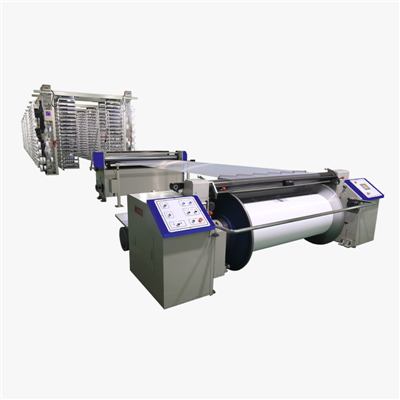
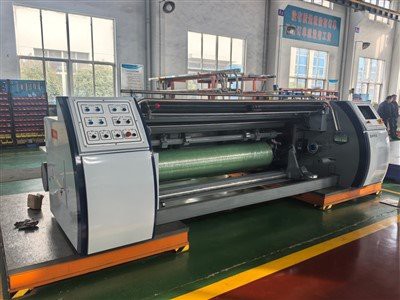
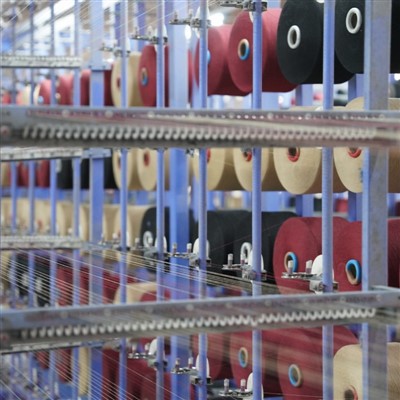
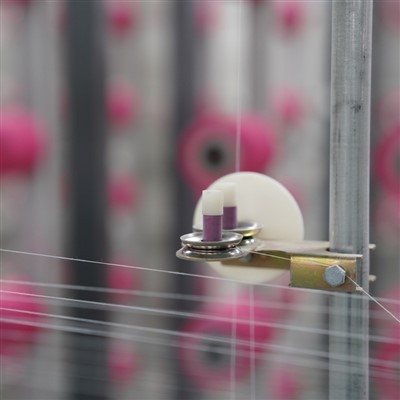
The core requirements for the control system of a spooling machine include stable and real-time adjustable tension to prevent the take-up reel from breaking; stable overall linear speed with smooth acceleration and deceleration to avoid warp slack or stretching; the target unwinding tension value must be adjusted according to the roll diameter to maintain constant warp tension; and the traction roller must adjust the feed speed in real time to follow the speed changes of the take-up roller to ensure appropriate feed tension.
Traditional spooling machines often use magnetic powder brakes or belt pulleys for control, which suffer from slow speed, low performance, and high noise. Modern high-speed spooling machines widely adopt electronic control system solutions based on programmable logic controllers (PLCs), human-machine interfaces (HMIs), and high-performance multi-drive frequency converters. The current mainstream solution adopts an architecture of "HMI + PLC + high-performance multi-drive frequency converter," with the system using CANopen or industrial Ethernet bus communication, resulting in simple wiring and saving cabinet space.