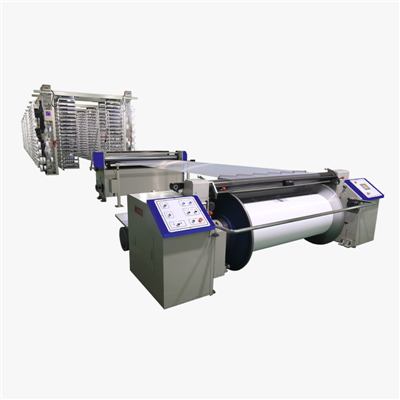
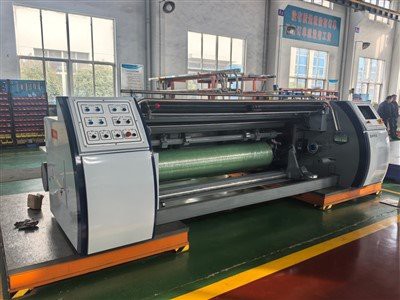
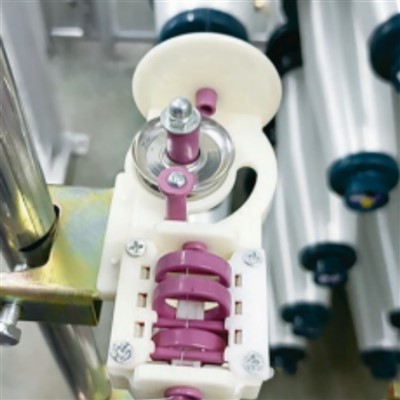
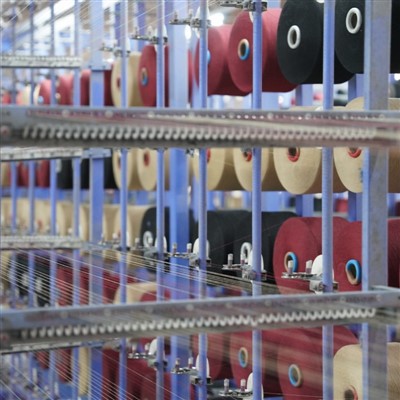
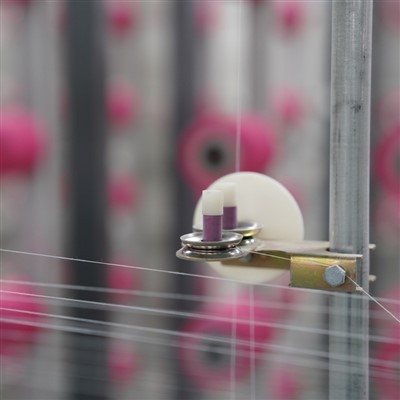
The characteristics and future directions of weaving machines include: processability, continuity, and completeness; high speed, high efficiency, and low maintenance; standardization, serialization, and universality; low energy consumption, low noise, and low pollution.
Automation and system products showcase cutting-edge technological achievements and innovative integration of automation in the textile machinery industry across the entire control chain, from intelligent detection and control systems to efficient drives and execution. Representative technologies include AI-based vision-based yarn and filament breakage detection, PLC control, robotics, digital twins, and MES systems.
Improving the adaptability of spinning equipment requires efforts in modular structural design and upstream/downstream coordination. Modular design concepts adapt to the development trend of multi-variety, small-batch, and short-cycle textile production, achieving flexibility.
Vortex spinning, due to its high efficiency and high output, has become an important spinning technology leading the high-quality development of the textile industry; rotor spinning machines can reach spinning cup speeds of up to 150,000 r/min.
Developing low-energy, low-emission, and low-pollution technologies, such as supercritical carbon dioxide anhydrous dyeing technology.