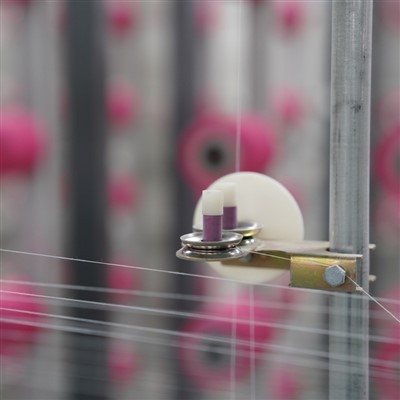
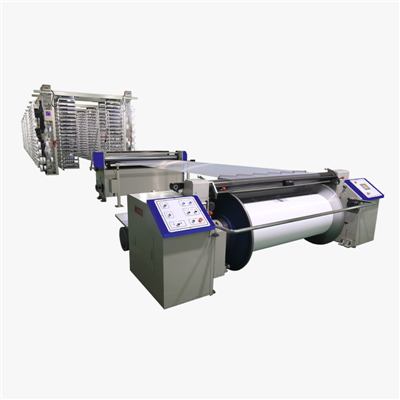
In the textile industry, the High Speed Section Warper stands as a cornerstone of efficient and high - quality warp preparation. As a trusted supplier of High Speed Section Warpers, I have witnessed firsthand the critical role that various components play in the smooth operation of these machines. Among these components, the tension sensor is of paramount importance.

Understanding the High Speed Section Warper
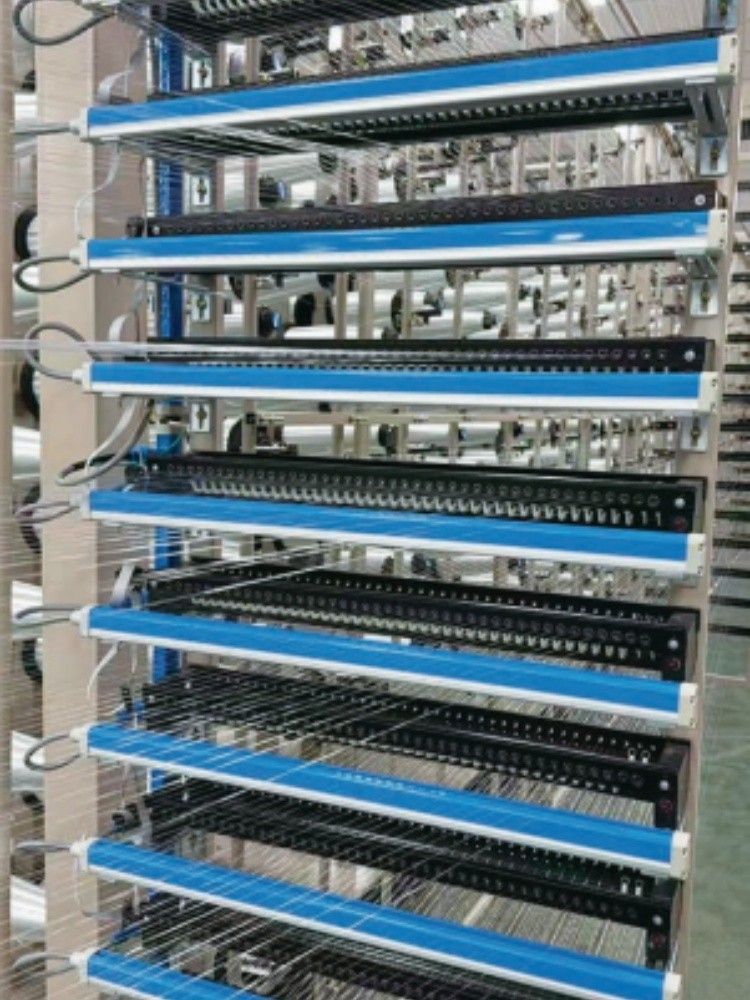
Before delving into the role of the tension sensor, it's essential to understand what a High Speed Section Warper does. A High Speed Section Warper is designed to wind yarns from a creel onto a warping beam in sections. This process is crucial for creating warps that are ready for weaving. The machine operates at high speeds, which requires precise control and monitoring of various parameters to ensure the quality of the warp.
The Role of the Tension Sensor
1. Ensuring Uniform Yarn Tension
One of the primary functions of the tension sensor in a High Speed Section Warper is to maintain uniform yarn tension. Yarn tension is a critical factor in the quality of the warp. If the tension is too high, the yarn may break, leading to production downtime and increased waste. On the other hand, if the tension is too low, the yarn may become slack, resulting in uneven winding and poor fabric quality.
The tension sensor continuously measures the tension of each yarn as it is being wound onto the beam. It sends this information to the machine's control system, which can then adjust the tension as needed. For example, if the sensor detects that the tension of a particular yarn is too high, the control system can reduce the braking force on that yarn, allowing it to unwind more easily. Conversely, if the tension is too low, the control system can increase the braking force to tighten the yarn.
2. Preventing Yarn Breakage
Yarn breakage is a common problem in the warping process, especially at high speeds. The tension sensor helps to prevent yarn breakage by ensuring that the yarn tension remains within a safe range. By continuously monitoring the tension, the sensor can detect any sudden changes in tension that may indicate an impending break.
When the sensor detects a significant increase in tension, it can trigger an alarm or automatically stop the machine to prevent the yarn from breaking. This not only reduces waste but also saves time and labor by minimizing the need for manual intervention to repair broken yarns.
3. Improving Winding Quality
Uniform yarn tension is essential for achieving high - quality winding. When the tension is consistent across all the yarns, the warp is wound evenly onto the beam, resulting in a smooth and uniform surface. This is important for subsequent weaving processes, as an uneven warp can lead to fabric defects such as streaks and uneven dyeing.
The tension sensor helps to improve winding quality by ensuring that each yarn is wound with the correct tension. This results in a more consistent and uniform warp, which in turn leads to better - quality fabrics.
4. Enhancing Machine Efficiency
A High Speed Section Warper operates at high speeds, and any interruption in the production process can have a significant impact on efficiency. The tension sensor plays a crucial role in maintaining the smooth operation of the machine. By preventing yarn breakage and ensuring uniform tension, the sensor reduces the need for machine stops and restarts, which can save time and increase productivity.
In addition, the data collected by the tension sensor can be used to optimize the machine's performance. For example, the control system can analyze the tension data to identify any patterns or trends that may indicate potential problems. This allows for proactive maintenance and adjustments to be made, further improving the machine's efficiency.
Comparison with Other Warping Machines
It's interesting to compare the role of the tension sensor in a High Speed Section Warper with its role in other types of warping machines, such as the Single End Warping Machine and the Beam Warping Machine.
In a Single End Warping Machine, the tension sensor is also used to control the tension of individual yarns. However, since this machine winds one yarn at a time, the tension control requirements are different from those of a High Speed Section Warper. The Single End Warping Machine typically operates at lower speeds, and the focus is more on the precise tension control of each individual yarn.
In a Beam Warping Machine, the tension sensor is used to control the overall tension of the entire warp. The machine winds multiple yarns simultaneously onto a single beam, and the tension sensor ensures that the tension is evenly distributed across all the yarns. While the basic principle of tension control is similar to that of a High Speed Section Warper, the scale and complexity of the tension control system may be different.
Conclusion
In conclusion, the tension sensor is a vital component in a High Speed Section Warper. It plays a crucial role in ensuring uniform yarn tension, preventing yarn breakage, improving winding quality, and enhancing machine efficiency. As a supplier of High Speed Section Warpers, we understand the importance of reliable tension sensors in the performance of our machines.
If you are looking for a high - quality High Speed Section Warper or have any questions about the role of the tension sensor in the warping process, we invite you to contact us for a detailed discussion. Our team of experts is ready to assist you in finding the best solution for your textile production needs.
References
- Textile Machinery Handbook.
- Journal of Textile Engineering and Technology.